
Installation begins with a site assessment and system design, followed by permitting, roof mounting, panel and inverter installation, electrical wiring to the main panel, and final inspection, answering the question of how does the installation process for residential solar panels work at ZBA Exteriors. ZBA Exteriors, based in Royersford, PA, guides homeowners through each professional step, typically completing projects across multiple coordinated stages rather than a single weekend.
Residential solar installation involves a site evaluation, custom system design, permitting, roof-mounted panel placement, electrical wiring, inverter connection, and final utility inspection. ZBA Exteriors, serving Royersford, PA homeowners, coordinates each phase to meet local code requirements. Professional installation avoids the safety risks. Design errors common in DIY solar projects, ensuring long-term energy savings and system performance.
What Should You Prepare Before Solar Installation Begins?

Preparation determines how smoothly a solar project moves from consultation to activation. Homeowners who gather the right information beforehand avoid delays and reduce the risk of costly design changes mid-project. ZBA Exteriors brings more than two decades of roofing and exterior experience to every solar project. That background shapes how each installation gets planned and executed from the first site visit.
Why does professional guidance matter before installation starts?
Skipping professional planning creates real risk. Residential solar projects attempted without expert guidance often run into safety hazards. Code-compliance issues that homeowners rarely see coming until permits stall or inspections fail. Working with a licensed local team from the outset avoids these setbacks.
Before scheduling an installation, Royersford-area homeowners should prepare the following:
Confirm roof condition. A stable, sound roof structure supports the panel array and mounting hardware without added strain.
Gather recent electric bills. Usage history helps the design team size the system correctly for actual household demand.
Clear access points. Attics, electrical panels, and roof access areas need to be reachable for inspection and wiring work.
Review shading factors. Trees or nearby structures affecting sun exposure should be noted before design begins.
Confirm roof condition. A stable, sound roof structure supports the panel array and mounting hardware without added strain.
Gather recent electric bills. Usage history helps the design team size the system correctly for actual household demand.
Clear access points. Attics, electrical panels, and roof access areas need to be reachable for inspection and wiring work.
Review shading factors. Trees or nearby structures affecting sun exposure should be noted before design begins.
Why does a local installer make preparation easier?
A nearby team simplifies scheduling and follow-up. ZBA Exteriors operates directly out of Royersford, PA, giving local homeowners quick access to an installation crew familiar with regional roofing conditions and permitting requirements. That proximity means site visits, follow-up questions, and post-installation service happen without long wait times or outside contractors unfamiliar with the area.
What Are ZBA Exteriors’ Core Installation Steps?
ZBA Exteriors follows a structured sequence for residential solar work, moving homeowners from a first conversation to a fully operating system. The installation process for residential solar panels unfolds across consultation, design, coordinated exterior work, mounting, and activation, each stage building on the last so nothing gets rushed or skipped.
Royersford homeowners often assume solar sits apart from the rest of their roof and exterior. It doesn’t. Solar installations move through multiple stages, from initial consultation and system design, through to the moment the panels start generating electricity. ZBA Exteriors treats each stage as connected, not isolated.
Consultation and site assessment — The team evaluates roof condition, orientation, and shading before recommending a system.
System design — Engineers map panel placement and equipment specifications to the home’s energy needs.
Exterior coordination — Roofing, gutter, or siding work gets scheduled alongside solar to avoid future disruption.
Mounting and wiring — Crews install racking, panels, and electrical connections with careful attention to detail.
Activation — The finished system is tested and switched on, converting sunlight into usable power.
Consultation and site assessment — The team evaluates roof condition, orientation, and shading before recommending a system.
System design — Engineers map panel placement and equipment specifications to the home’s energy needs.
Exterior coordination — Roofing, gutter, or siding work gets scheduled alongside solar to avoid future disruption.
Mounting and wiring — Crews install racking, panels, and electrical connections with careful attention to detail.
Activation — The finished system is tested and switched on, converting sunlight into usable power.
Does ZBA Exteriors Handle More Than Just Solar Panels?
Yes. ZBA Exteriors’ solar work sits inside a broader lineup of exterior services, covering roofing, siding, gutters, windows, doors, and decks. One team can coordinate a solar installation alongside a roof replacement or gutter upgrade, cutting down on scheduling headaches for the homeowner.
What Standard Guides the Actual Installation Work?
Craftsmanship drives every stage of the build, not just the final result. Crews approach mounting, wiring, and system checks with the same attention to detail applied across roofing and siding projects. That consistency supports long-term performance, keeping the system protected and producing reliable energy for years after installation day.
What Happens During Roof Prep And Mounting?
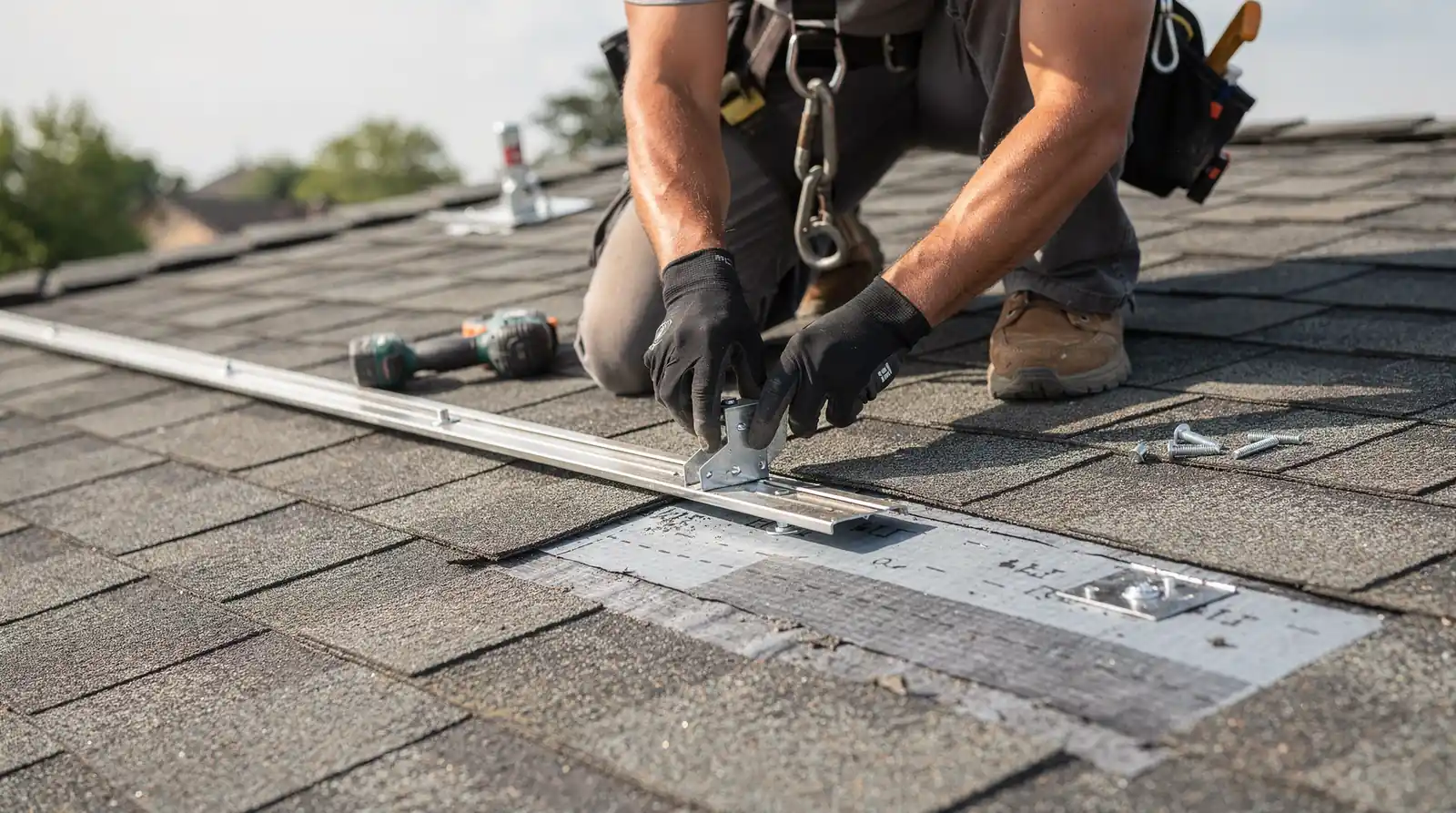
Roof prep begins with a structural inspection, followed by mounting hardware installation and racking alignment before any panel touches the roof. Skipping this stage risks leaks, uneven weight distribution, and voided warranties down the road. Homeowners in Royersford benefit from a crew that treats the roof as the foundation of the entire residential solar panel installation process, not an afterthought.
The installation process for residential solar panels at ZBA Exteriors starts by locating rafters. Confirming the roof surface can support the added load. Crews then install flashing and mounting brackets designed to keep water out while anchoring the racking system securely. Solar solutions from ZBA Exteriors are engineered to protect the home’s existing roofing structure throughout this stage, not compete with it. Every bracket and seal works alongside the roof rather than against it.
Why Does Mounting Quality Matter So Much?
Mounting quality determines whether a solar system lasts decades or causes problems within a few years. Loose racking leads to panel movement, wind damage, and roof penetrations that fail to seal properly.
How Long Does Roof Prep Typically Take?
Timelines vary by roof type, pitch, and material, so an on-site assessment gives the clearest estimate.
Homeowners can expect a sequenced approach:
Inspect the roof structure and decking condition.
Mark mounting points based on rafter location.
Install flashing to prevent water intrusion.
Attach racking and confirm alignment before panel placement.
Inspect the roof structure and decking condition.
Mark mounting points based on rafter location.
Install flashing to prevent water intrusion.
Attach racking and confirm alignment before panel placement.
That structured, step-by-step method reflects why the company’s work continues to earn a strong base of five-star Google reviews from homeowners who have completed the process. Breaking installation into clear stages, rather than treating it as one large task, gives homeowners confidence that their roof stays protected while the system takes shape above it.
How Long Does The Full Installation Take?
Two to three months covers the typical timeline for a residential solar project, from the first consultation through final activation. That window includes site evaluation, permitting, equipment ordering, and the actual mounting and wiring work on the roof. Royersford homeowners should plan around this full span rather than expecting power generation within days of signing a contract.
Permitting and utility approvals often take longer than the physical installation itself. The installation process for residential solar panels at ZBA Exteriors follows a structured sequence designed to avoid delays caused by rushed scheduling or missed inspection windows. Quality craftsmanship takes precedence over speed, and long-term performance depends on getting each phase right the first time.
Why does solar installation take so long?
Multiple approvals stand between contract signing and system activation. Local permitting offices, utility interconnection reviews, and equipment lead times each add weeks to the calendar. A homeowner who understands this upfront avoids frustration mid-project.
Does a longer timeline mean lower quality work?
No — a dependable pace protects the outcome. ZBA Exteriors builds its reputation as an exterior contractor homeowners can trust to coordinate every stage of a multi-week project without cutting corners. Rushing roof penetrations, electrical connections, or inspections risks leaks, code violations, or system underperformance down the road.
Homeowners preparing for solar should expect a process built around these stages:
Initial consultation and site assessment
Permitting and utility coordination
Equipment procurement and scheduling
On-roof installation and electrical connection
Final inspection and system activation
Initial consultation and site assessment
Permitting and utility coordination
Equipment procurement and scheduling
On-roof installation and electrical connection
Final inspection and system activation
Patience during these two to three months pays off in a system built to perform for decades.
What Mistakes Should Homeowners Avoid During Installation?
Three errors cost homeowners the most: skipping professional design guidance, chasing the cheapest bid, and hiring contractors unfamiliar with the local area. Each mistake carries a real financial or logistical price, from underperforming systems to stalled timelines. Avoiding them starts with understanding why they happen in the first place.
Skipping professional system design guidance ranks as the costliest mistake homeowners make. A system sized or configured without expert input often underperforms on energy bill savings, leaving homeowners with panels that never deliver the payoff they expected. Design decisions—panel placement, angle, wiring configuration—directly affect how much a household actually saves each month.
Is it a mistake to choose a contractor based on price alone?
Yes. Prioritizing the lowest bid over long-term durability is one of the most common regrets homeowners voice after installation. ZBA Exteriors’ team commits to delivering durable exterior solutions across roofing, siding, windows, gutters, solar, and decks, precisely because cheap shortcuts tend to compromise both protection and appearance down the road. A lower upfront cost rarely offsets years of repairs or reduced system performance.
Does hiring a local contractor really matter?
It matters more than most homeowners assume. Working with an established, local provider based in Royersford, PA, cuts down on the miscommunication that often derails installation timelines. Local familiarity means fewer surprises with permitting, scheduling, and site conditions.
Consider these avoidable missteps before signing any contract:
Bypassing professional design review to save money upfront
Selecting a contractor solely on price without evaluating durability
Overlooking the value of a locally based team who understands regional requirements
Bypassing professional design review to save money upfront
Selecting a contractor solely on price without evaluating durability
Overlooking the value of a locally based team who understands regional requirements
Homeowners who sidestep these three mistakes position their solar investment for stronger, longer-lasting returns.
FAQ
What steps make up the residential solar panel installation process?
Installation moves through site assessment, custom system design, permitting, roof-mounted panel placement, electrical wiring, inverter connection, and a final utility inspection, with ZBA Exteriors coordinating each phase to meet local code requirements.
What should homeowners prepare before solar installation begins?
Homeowners should confirm roof condition, gather recent electric bills, clear access to attics and electrical panels, and review shading factors from trees or nearby structures affecting sun exposure.
Why does working with a local Royersford installer matter?
ZBA Exteriors operates directly from Royersford, PA, giving homeowners quick access to a crew familiar with regional roofing conditions and permitting requirements, without delays from outside contractors.
Conclusion
In closing, residential solar panel installation represents a significant investment in your home’s energy independence and long-term value. By understanding each phase of the process—from initial assessment through final activation—you gain confidence in the quality craftsmanship. Attention to detail that defines a professional installation. ZBA Exteriors brings this same commitment to excellence across all exterior home improvements, ensuring your solar system performs reliably for years to come.